Allosaurus: The Apex of the Jurassic
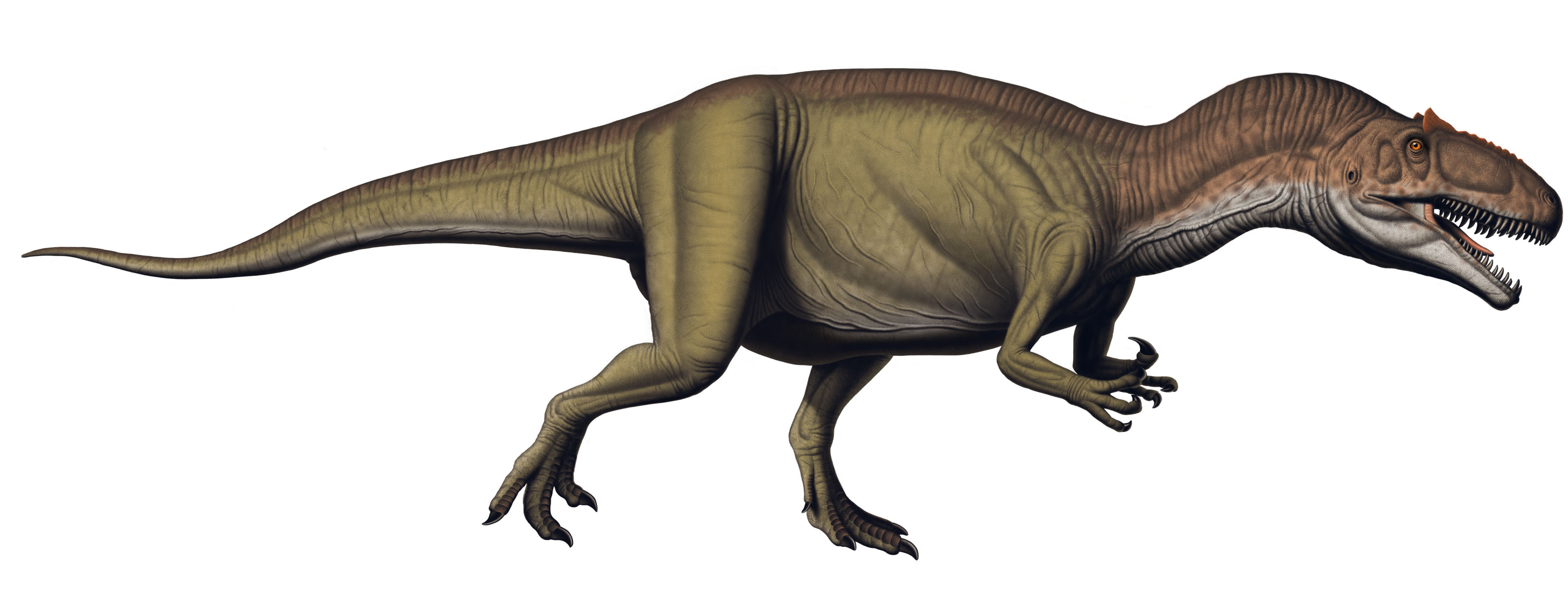
Among the great predators of prehistory, few were as formidable or as misunderstood as Allosaurus. Long before Tyrannosaurus rex took the crown, this sleek hunter ruled the Jurassic plains with speed, precision, and terrifying grace.
A Snapshot from the Jurassic
Allosaurus lived about 155 to 145 million years ago, during the Late Jurassic period. Fossils have been discovered across North America, Portugal, and Tanzania, revealing a predator up to nine meters long and more than a ton in weight.
Its skull was large but lightweight, built with wide openings that reduced mass while anchoring powerful jaw muscles. Unlike bone-crushing tyrannosaurs, Allosaurus hunted with finesse — slashing with its jaws in a hatchet-like motion to tear flesh from prey such as Stegosaurus or Camarasaurus.
Each hand bore three curved claws, sharp and nearly the length of a human forearm, perfect for grappling with struggling prey. Its long tail balanced its stride, giving it both stability and speed.
Small Clues, Big Stories
Fossil evidence suggests that Allosaurus may not have been a solitary killer. Trackways and bone beds point to groups of individuals moving together — perhaps not in tight packs, but in loose associations around shared kills.
Its senses were keen. Studies of its inner ear suggest good balance and depth perception, and bite marks on surviving dinosaurs show that Allosaurus both fought and fed among its own kind. Life, even for a top predator, was rarely simple.
In the modern age, Allosaurus was one of the first large carnivores successfully cloned by InGen geneticists. Intended as a “manageable apex” for park testing, it proved surprisingly adaptable and just as temperamental as its fossil record implied. Current populations on Isla Nublar display mottled gray-green skin with faint striping and amber eyes that glint in low light. They favor open clearings bordered by forest, where they can sprint after prey or patrol territory. While smaller than Tyrannosaurus rex, the Allosaurus compensates with agility and aggression.
Behavior
Modern Allosaurus are primarily solitary but tolerate brief contact during feeding. They communicate through deep roars and low huffs, often accompanied by dramatic head displays. When challenged, individuals will circle, feint, and lunge — more performance than chaos, but no less dangerous.
Habitat
On Isla Nublar, Allosaurus occupies semi-arid environments including floodplains, river valleys, forests, and open plains. Sparse conifers, boulders, and dry streambeds provide both cover and line of sight for ambush.
They rest during midday heat and become most active at dusk. At night, their echoing calls drift across the ridges — a guttural rhythm that makes everyone stop to listen.
These are not monsters, but survivors. Allosaurus has outlasted extinction twice — once in stone, and once in science.
Field Data Sheet
| Scientific Name | Allosaurus fragilis |
| Common Name | Allosaurus |
| Length | up to 12 meters |
| Weight | 2.5 tons |
| Diet | Carnivore (medium to large vertebrates) |
| Social Behavior | Semi-social; loose groups or solitary |
| Intelligence Level | Moderate-high (problem-solving and observation) |
| Native Era | Late Jurassic (155–145 million years ago) |
| Recreated By | InGen, 1990s |
| Known Locations | Isla Nublar, Isla Sorna |
| Containment Class | Beta — Requires reinforced barriers and controlled feeding |
| Threat Level | High (lethal to people and large fauna) |
| Behavioral Notes | Highly territorial, easily provoked |
Serafina Moretti