Albertosaurus: The Swift Tyrant of the North
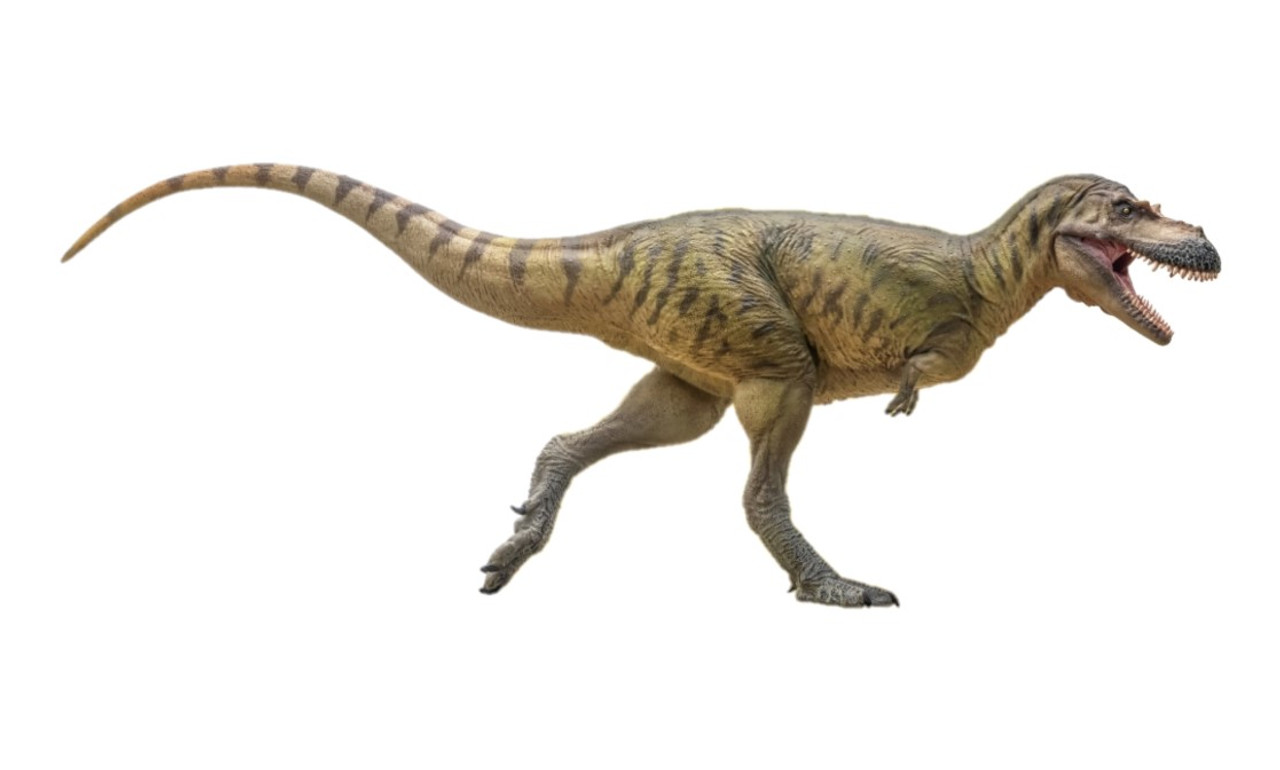
Often overshadowed by its famous cousin Tyrannosaurus rex , Albertosaurus was nonetheless a powerful and efficient predator in its own right. Sleeker, faster, and more lightly built, this northern tyrant ruled its domain with speed, precision, and brutal intelligence.
A Snapshot from the Jurassic
Albertosaurus lived approximately 70–68 million years ago during the Late Cretaceous period. Fossils have been found primarily in what is now Alberta, Canada — the dinosaur’s namesake offering a detailed glimpse into its anatomy and behavior. These discoveries suggest a predator well adapted to open floodplains, river valleys, and forested lowlands.
Compared to Tyrannosaurus rex , Albertosaurus was more slender and lightly built, reaching lengths of around 9 meters but weighing significantly less. Its long legs and narrow frame indicate it was capable of impressive bursts of speed, making it well-suited for chasing prey rather than relying solely on ambush.
Its massive skull housed rows of sharp, serrated teeth designed to slice through flesh, while powerful neck muscles allowed it to deliver devastating bites. The long, muscular tail acted as a counterbalance, enabling quick turns during pursuit — a crucial advantage when hunting agile herbivores.
Albertosaurus possessed a streamlined, predatory silhouette. Modern reconstructions and cloned specimens often display muted earth tones — browns, dark greens, and charcoal greys — providing camouflage against forested and riverine environments. Some individuals exhibit subtle striping or mottling along the flanks, breaking up their outline in dappled light
Behavior
Evidence suggests Albertosaurus may have been more social than other large theropods. Several fossil sites contain multiple individuals of different ages, hinting at pack-like structures or at least temporary groupings. These groups may have cooperated when hunting large prey or scavenging carcasses.
Cloned individuals show high levels of awareness and reactivity, responding quickly to movement, sound, and changes in their environment. They exhibit strong territorial instincts and dominance displays, including deep vocalizations, head lowering, and aggressive posturing.
Habitat
Albertosaurus thrived in warm, temperate environments with seasonal flooding and abundant plant life. Riverbanks and floodplains provided both water and prey, while forests offered cover for ambush and nesting. In modern recreated habitats, they favor wide territories with clear movement paths, shaded resting areas, and access to water — conditions that mirror their ancient ecosystems.
Field Data Sheet
| Scientific Name | Albertosaurus sarcophagus |
| Common Name | Alberta Lizard |
| Length | 8.5-9.5 meters |
| Weight | 3-4.4 tons |
| Diet | Carnivore (large herbivores) |
| Social Behavior | Semi-social, juveniles more social |
| Intelligence Level | Hight (strategic hunting) |
| Native Era | Late Cretaceous (70-68 million years ago) |
| Recreated By | InGen (experimental northern theropod project) |
| Known Locations | Isla Nublar (restricted zones), Isla Sorna |
| Containment Class | Gamma- High-risk, territorial predator |
| Threat Level | High (lethal to people and large fauna) |
| Behavioral Notes | Highly alert, fast-reacting predator. |
Serafina Moretti