EDMONTOSAURUS
THREAT: MODERATE
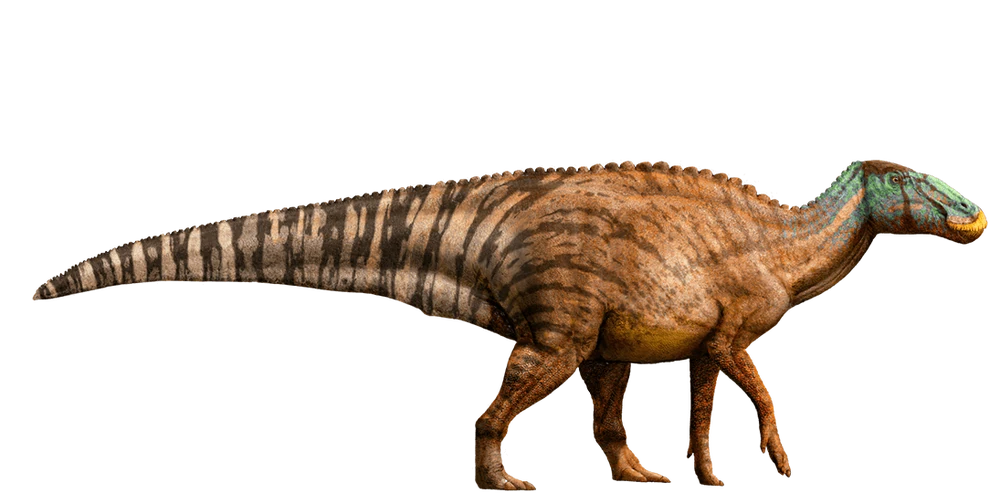
OVERVIEW
Edmontosaurus was one of the largest and most successful herbivorous dinosaurs of the Late Cretaceous. Highly social and adaptable, they dominated river valleys and floodplains across North America. Herds could number dozens of individuals, with complex social interactions and protective behavior around juveniles.
ERA & LOCATION
Late Cretaceous: 73–66 million years ago
Found primarily in Alberta, Canada, Montana, and other parts of North America.
Found primarily in Alberta, Canada, Montana, and other parts of North America.
CLASSIFICATION
Hadrosaurid ("duck-billed dinosaur")
Herbivore
Related to Shantungosaurus and Saurolophus.
Herbivore
Related to Shantungosaurus and Saurolophus.
PHYSICAL DESCRIPTION
Length: 9–12 meters
Weight: 3–4 tons
Muscular tail for balance, broad snout for grazing
Dental batteries for grinding tough plants
Fossilized skin shows mosaic patterns and small tubercles
Weight: 3–4 tons
Muscular tail for balance, broad snout for grazing
Dental batteries for grinding tough plants
Fossilized skin shows mosaic patterns and small tubercles
BEHAVIOR
Herd-oriented, forming large groups.
Social hierarchies observed in fossil trackways and nesting sites.
Protective behavior around juveniles, cooperative grazing.
Likely vocal communication within the herd.
Social hierarchies observed in fossil trackways and nesting sites.
Protective behavior around juveniles, cooperative grazing.
Likely vocal communication within the herd.
DIET & FEEDING STRATEGY
Strict herbivore: low plants, ferns, aquatic vegetation.
Teeth replaced continuously.
Foraging influenced by seasonal vegetation and herd movement.
Teeth replaced continuously.
Foraging influenced by seasonal vegetation and herd movement.
HABITAT
Floodplains, river valleys, forested lowlands.
Seasonal flooding influenced migration and feeding.
Nesting in sandy or soft soil, sometimes in colonies.
Seasonal flooding influenced migration and feeding.
Nesting in sandy or soft soil, sometimes in colonies.
FIELD DATA SHEET
Scientific Name: Edmontosaurus annectens
Common Name: Edmontosaurus
Length: 9–12 meters
Weight: 3–4 tons
Diet: Herbivore (plants, ferns, aquatic vegetation)
Social Behavior: Herd-based, juveniles more social
Intelligence: Moderate
Era: Late Cretaceous (73–66 mya)
Discovery: North America (Alberta, Montana)
Containment Class: Beta — Manageable
Threat Level: Moderate
Behavioral Notes: Highly alert, protective of young, vocal within herds
Common Name: Edmontosaurus
Length: 9–12 meters
Weight: 3–4 tons
Diet: Herbivore (plants, ferns, aquatic vegetation)
Social Behavior: Herd-based, juveniles more social
Intelligence: Moderate
Era: Late Cretaceous (73–66 mya)
Discovery: North America (Alberta, Montana)
Containment Class: Beta — Manageable
Threat Level: Moderate
Behavioral Notes: Highly alert, protective of young, vocal within herds
STATS
Strength
Speed
Intelligence
Aggression
SERAFINA MORETTI